Shelter or Sink? How Property Insurance Markets Are Reshaping Risk
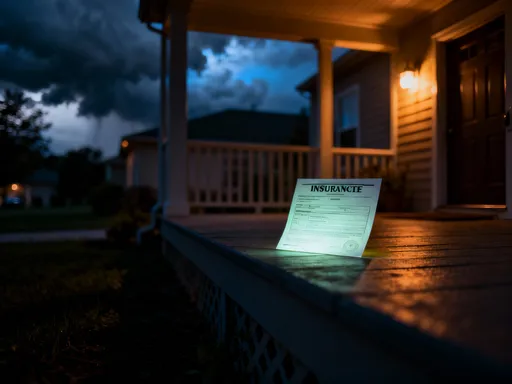
Imagine putting everything into a home, only to face a storm that wipes out years of savings—this was almost my reality. I didn’t realize how fragile protection could be until I saw premiums shift, coverage shrink, and insurers pull back. What’s happening in the property insurance market isn’t just background noise—it’s a quiet revolution. Now, more than ever, understanding these trends isn’t optional. It’s the difference between security and surprise. For homeowners across the country, especially those managing household budgets and long-term financial stability, the shifting ground beneath property insurance demands attention. This is no longer just about paying a bill; it’s about preserving the value of one of life’s largest investments.
The Ground Beneath Your Roof: Why Property Insurance Can’t Be an Afterthought
For decades, property insurance has been treated as a routine requirement, often bundled with mortgage payments and rarely questioned until a claim arises. Yet today, that same policy represents far more than a compliance formality—it is a frontline defense against growing financial uncertainty. Homeownership remains a cornerstone of financial security for millions of families, symbolizing stability, legacy, and long-term planning. But as climate volatility increases and natural disasters become more frequent and severe, the foundation of that security is being tested. What once seemed like distant risks—wildfires in suburban neighborhoods, floods in historically dry regions, hurricanes reaching further inland—are now part of everyday reality for many homeowners.
This transformation means property insurance can no longer be approached passively. The traditional model, where insurers offered broad coverage at predictable rates, is giving way to a more dynamic and selective system. Insurers are no longer simply reacting to claims; they are proactively reassessing which properties qualify for coverage and under what terms. In some areas, particularly those exposed to repeated weather events, obtaining insurance has become difficult, expensive, or in rare cases, nearly impossible. These shifts reflect a broader recalibration of risk—one that places greater responsibility on homeowners to understand not just what their policy covers, but whether it will hold up when needed most.
Moreover, the role of insurance has evolved from passive protection to active risk management. It is no longer enough to assume that a standard policy will cover damage from wind, fire, or water. Today’s policies often come with nuanced exclusions, higher deductibles, and conditional renewals. This new environment requires homeowners to engage more deeply with their coverage, asking questions about coverage limits, replacement costs, and disaster-specific protections. Ignoring these details can leave families exposed at the worst possible moment. For 30- to 55-year-old women managing homes and family finances, this shift underscores the importance of being informed, vigilant, and prepared—not just for today’s risks, but for those on the horizon.
Market Shifts You Can’t Ignore: From Climate Costs to Capital Retreat
The property insurance industry is undergoing a structural transformation driven by two powerful forces: the rising cost of climate-related disasters and the withdrawal of capital from high-risk areas. Historically, insurers spread risk across large geographic pools, relying on statistical predictability to maintain profitability. But as extreme weather events become more frequent and intense, that predictability is eroding. Hurricanes, wildfires, and flooding are no longer outliers; they are recurring events that strain claims reserves and challenge long-held assumptions about safety and insurability.
In response, many major insurers have begun retreating from regions deemed too risky. California, Florida, and parts of Louisiana have seen significant insurer exits, with companies either refusing to renew policies or completely pulling out of the market. When insurers leave, the burden often falls on state-backed insurance plans—so-called “insurers of last resort”—which typically offer more limited coverage at higher premiums. These government-supported programs were designed as temporary solutions, not permanent replacements, and their growing use signals a deeper instability in the market.
At the same time, the capital markets that back insurance companies are becoming more cautious. Reinsurers—the firms that insure the insurers—are demanding higher returns for taking on climate risk, which trickles down to consumers in the form of higher premiums and tighter underwriting standards. Some reinsurers have even stopped covering certain types of risks altogether, such as wildfire exposure in drought-prone areas. This capital retreat is reshaping the insurance landscape, creating a patchwork of availability where location determines not only property value but also access to basic financial protection.
These shifts are not limited to coastal or fire-prone regions. Increasingly, inland areas once considered safe are being reevaluated. Heavy rainfall and flash flooding have damaged homes in states like Iowa and Tennessee, prompting insurers to reassess flood risk models. Urban sprawl and deforestation are also contributing to increased vulnerability, as natural buffers disappear and infrastructure struggles to keep pace. The result is a market where insurability is no longer guaranteed, and where homeowners must be aware of how broader environmental and economic trends affect their personal financial security.
The New Cost of Coverage: What Rising Premiums Really Mean
For many homeowners, the most immediate sign of market change is the rising cost of insurance premiums. Year after year, families are seeing double-digit increases—not because they’ve filed claims or changed their behavior, but because the risk profile of their location has shifted. These increases are not simply a reflection of inflation or general economic trends; they represent a fundamental revaluation of risk. Insurers are no longer pricing policies based solely on historical data but are incorporating forward-looking climate models, population density trends, and infrastructure resilience into their calculations.
What this means for consumers is that insurance is no longer a fixed expense but a variable one, much like utility bills or property taxes. A home in a region experiencing more frequent storms may see premiums rise steadily, while another in a less affected area might see slower growth. In some cases, homeowners have reported increases of 20%, 30%, or even more in a single year. These jumps can strain household budgets, especially for those on fixed or single incomes, making insurance one of the fastest-growing components of homeownership costs.
The implications go beyond monthly payments. Rising premiums affect overall housing affordability and can influence decisions about where to live, whether to sell, or how much home one can realistically afford. For families planning for retirement or managing multiple financial responsibilities, unpredictable insurance costs add a layer of complexity to long-term budgeting. Some homeowners are responding by reducing coverage or increasing deductibles to lower premiums, but these choices can backfire if a major claim arises. Others are exploring alternative markets, such as surplus lines insurers or mutual aid associations, though these often come with trade-offs in terms of coverage scope and financial oversight.
Understanding the drivers behind premium increases is essential for making informed decisions. It’s not enough to accept a rate hike as inevitable. Homeowners should ask their insurers for detailed explanations of changes, review comparable rates in their area, and consider whether risk-mitigation improvements could qualify them for discounts. Knowledge empowers action—and in a market where costs are rising faster than incomes, proactive management can make a meaningful difference in financial outcomes.
Gaps in the Shield: When Standard Policies Fall Short
One of the most unsettling realizations for homeowners is discovering that their policy doesn’t cover the damage they assumed was protected. Standard property insurance policies have long excluded certain perils—most notably flood and earthquake—but in recent years, the scope of exclusions has expanded. Wildfire, sewer backup, and even certain types of wind damage are increasingly subject to limitations or additional requirements. These aren’t arbitrary exclusions; they are responses to the growing frequency and cost of claims in these categories, which threaten the financial sustainability of broad coverage models.
Flood damage, for example, is not covered under standard homeowners’ policies, yet many people assume otherwise. The National Flood Insurance Program (NFIP) offers coverage, but it comes with its own limitations, including coverage caps and delayed claims processing. In high-risk areas, private flood insurance is becoming more available, but it is often expensive and may require home modifications to qualify. Similarly, wildfire coverage is being reevaluated in many regions, with some insurers requiring homeowners to clear vegetation, install ember-resistant vents, or upgrade roofing materials before offering or renewing a policy.
Sewer backup and water damage from heavy rainfall are also emerging as common gaps. As urban drainage systems become overwhelmed, more homes are experiencing basement flooding from backed-up sewers. Standard policies may offer limited coverage for this, but only if a specific endorsement is purchased. Without it, thousands of dollars in cleanup and repairs may not be recoverable. These exclusions highlight a broader trend: insurers are shifting from comprehensive coverage to a more modular approach, where protection must be actively selected and customized.
The danger lies in complacency. Many homeowners review their policies only when renewing or after a loss—by which time it’s too late. A thorough annual review of coverage, including endorsements, exclusions, and liability limits, is essential. Homeowners should also document major upgrades, maintain records of maintenance, and communicate regularly with their agents. In a market where coverage is no longer guaranteed, vigilance is the best defense against unexpected financial loss.
Smarter Protection: Strategies to Stay Covered Without Overspending
While market forces are beyond individual control, homeowners are not powerless. There are practical, proven strategies to maintain strong coverage while managing costs. The first step is to shift from a passive to an active approach—treating insurance as a dynamic part of financial planning rather than a static bill. This mindset change opens the door to smarter decisions that reduce risk, improve resilience, and often lower premiums.
One of the most effective ways to reduce insurance costs is through home improvements that lower risk. Impact-resistant roofing, for example, can qualify homeowners for discounts of up to 30% in hurricane-prone areas. Similarly, installing storm shutters, reinforced garage doors, or fire-resistant siding can lead to significant savings. Even smaller upgrades—like smart water leak detectors or upgraded electrical systems—can reduce the likelihood of claims and make a home more attractive to insurers. These improvements not only lower premiums but also increase the home’s overall safety and value.
Bundling insurance policies is another widely available strategy. Combining home and auto insurance with the same provider often results in multi-policy discounts, sometimes reducing total premiums by 15% to 25%. Some insurers also offer loyalty discounts, safety device incentives, or claims-free bonuses. Shopping around every few years is equally important; staying with the same provider out of convenience can result in paying more than necessary. Independent agents and online comparison tools make it easier than ever to evaluate options and negotiate better terms.
Adjusting deductibles is another lever homeowners can use. Increasing the deductible from $500 to $1,000 or $2,500 can significantly reduce annual premiums, especially for those with emergency savings to cover out-of-pocket costs. However, this strategy requires careful planning—choosing a deductible that’s too high could make it difficult to file a claim when needed. The key is balance: selecting a deductible that lowers costs without creating financial strain in the event of a loss.
Finally, integrating insurance into broader financial planning can yield long-term benefits. Just as retirement savings and education funds are planned for, so too should risk management. This includes maintaining an emergency fund, reviewing coverage in light of life changes (such as renovations or working from home), and considering how insurance fits into estate planning. For families managing complex financial lives, this holistic approach ensures that protection is both adequate and sustainable.
The Role of Data and Tech: How Insurers See Your Home Differently
Technology is transforming how insurers assess risk, moving far beyond the traditional inspection and application forms. Today, many companies use satellite imagery, aerial drones, and artificial intelligence to analyze properties with remarkable precision. These tools allow insurers to evaluate roof condition, tree proximity, elevation, and even local vegetation density without ever setting foot on the property. The result is a more accurate, data-driven assessment—but also one that leaves homeowners with less room for ambiguity.
For example, a home surrounded by dense trees may be flagged for higher wildfire risk, even if the homeowner maintains the yard diligently. A roof showing signs of aging in satellite images might trigger a rate increase or a requirement for inspection. These assessments are not inherently unfair, but they do require homeowners to be more proactive in maintaining their property’s risk profile. Regular upkeep—cleaning gutters, trimming branches, repairing shingles—is no longer just about aesthetics; it’s about insurability.
Smart home technology is also playing a growing role. Devices like water sensors, security systems, and fire alarms can provide real-time monitoring and reduce the likelihood of major claims. Many insurers offer premium discounts for homes equipped with these systems, recognizing their value in preventing loss. Some companies even offer usage-based insurance models, where premiums are adjusted based on actual risk behavior, similar to how auto insurers use telematics.
While increased data transparency benefits responsible homeowners, it also raises concerns about privacy and fairness. Not all homeowners have equal access to smart devices or the ability to make structural upgrades. However, the trend is clear: the more data a home generates about its safety and condition, the better positioned it is in the insurance market. For those willing to invest in monitoring and maintenance, technology offers a path to lower costs and stronger protection.
Looking Ahead: What the Future Holds for Homeowners and Markets
The property insurance market will not revert to the stable, predictable system of the past. The forces reshaping it—climate change, technological advancement, and capital reallocation—are long-term and structural. For homeowners, this means adapting to a new reality where resilience is as important as location, and where financial planning must include proactive risk management. The homes we live in are no longer just shelters; they are assets in a complex, evolving financial ecosystem.
In the coming years, insurability will play a larger role in real estate decisions. Buyers will increasingly consider not just school districts and commute times, but also whether a home can be insured affordably and reliably. Lenders may require more detailed risk assessments, and municipalities could adopt stricter building codes to reduce exposure. Homes built or retrofitted with resilient materials, elevated foundations, or fire-resistant designs may gain value not just for their durability, but for their insurability.
For families managing household finances, the lesson is clear: knowledge is protection. Staying informed about market trends, understanding policy details, and making strategic improvements can safeguard both home and financial future. The goal is not to eliminate risk—this is impossible—but to manage it wisely. By treating insurance as a core component of financial health, homeowners can navigate uncertainty with greater confidence.
In this changing landscape, the most valuable asset is not the home itself, but the awareness and preparedness of those who live in it. The quiet revolution in property insurance is not just a challenge—it is an invitation to build smarter, plan more carefully, and protect what matters most. Security is no longer automatic, but with the right approach, it remains within reach.