More Than Just Steps: How a Simple App Brought Our Family Together Through Daily Walks
Walking used to be something I did alone—headphones in, mind racing. But when I started sharing my daily walks with family through a simple app, everything changed. It wasn’t about fitness anymore; it was about connection. We began cheering each other on, sharing moments, and building a tradition we never expected. This is how technology quietly transformed our routines—and our relationships—without us even realizing it. It didn’t require a big investment, a fancy device, or even a lot of time. Just a few taps on a phone, and suddenly, we were walking together, even when miles apart. And in that small shift, something beautiful grew.
The Loneliness in My Daily Routine
I used to think I was doing everything right. Mornings started early—coffee in hand, shoes laced, playlist queued. I’d walk fast, focused, eyes forward, counting steps like they meant something. Ten thousand was the magic number, and hitting it gave me a flicker of satisfaction. But as the days passed, that feeling faded. The walks didn’t leave me energized—they left me empty. I was moving my body, but my heart wasn’t in it. It wasn’t just the walking. Life had become a series of solo acts: cooking for one, folding laundry in silence, scrolling through photos of other people’s lives while mine felt… quiet. Too quiet.
My kids were grown, living in different cities. My sister was raising her own family three states away. My mom lived close, but we’d fallen into the same pattern—quick check-in calls, birthday cards, holiday visits. We loved each other deeply, but we weren’t living together, not really. We were coexisting in separate bubbles, each of us spinning in our own orbit. I’d ask, “How was your day?” and get, “Fine.” And that was it. No stories, no laughter, no shared rhythm. I realized I missed the little things—walking with my daughter to school, strolling with my mom through the farmers market, even arguing with my sister over which route was faster. Those moments weren’t just time—they were connection. And I hadn’t even noticed how much I’d lost until it was gone.
That’s when I started wondering: could technology help? Not the kind that pulls us apart with endless notifications and comparisons, but something gentle, something that brings us closer. Something that doesn’t demand perfection, just presence. I wasn’t looking for a miracle. I just wanted to feel less alone while doing something I was already doing anyway.
Discovering a Shared Digital Tradition
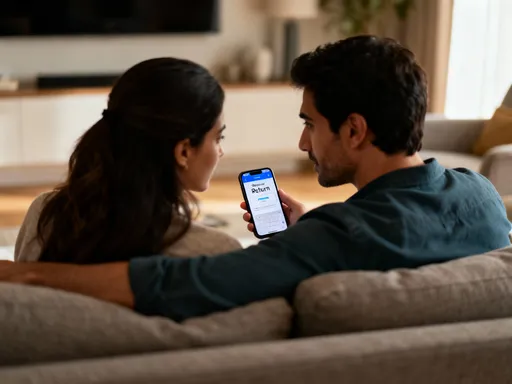
I didn’t set out to change our family culture. Honestly, I just clicked on an ad while scrolling one evening. “Stay connected through movement,” it said. Simple. Curious, I downloaded the app—no extra cost, no complicated setup. Just a few minutes to create a private group and invite family. I started small: my sister, my mom, and me. I sent the invite with a little note: “Let’s see if we can hit 25,000 steps together this week. No pressure—just for fun.” I didn’t expect much. Maybe a polite “thanks” and silence.
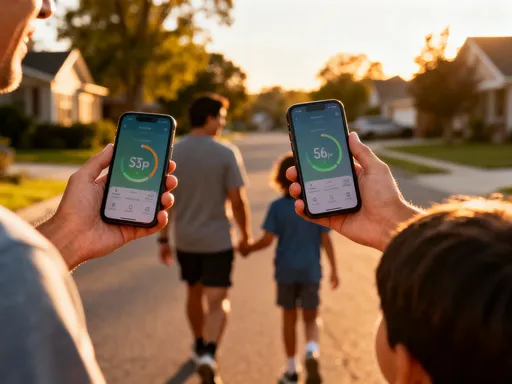
But the next morning, I opened the app and saw Mom’s steps already climbing. By 8 a.m., she’d logged 3,000. My sister had walked her dog before work and left a voice note: “Team, I’m in! Rain or shine, we’re moving!” I smiled. Then I saw the group chat light up with a message from my nephew: “I walked Max an extra lap for us! Does that count?” It did. And suddenly, it wasn’t just about steps. It was about being part of something. That week, we didn’t just hit 25,000—we hit 32,000. And we celebrated like we’d won a prize. A shared badge popped up: “First Week Finishers!” We took screenshots, sent them around, even texted my dad, who wasn’t on the app yet. He replied, “So when do I get to join this walking club?”
That was the moment I knew this was different. It wasn’t another fitness fad. It was becoming a ritual—a quiet, consistent way to say, “I’m thinking of you.” We weren’t texting long messages or scheduling calls we’d probably miss. We were just… walking. And in that simple act, we were showing up for each other. The app didn’t force us to connect. It just made it easy. And sometimes, that’s all we need—a door left open, a path we can follow without thinking too hard.
How the App Made the Difference
You might think it takes a high-tech gadget or a fancy smartwatch to make this work. But here’s the truth: the app I use doesn’t need any special device. It runs on the phone I already carry. No monthly fees. No complex dashboard. Just a clean screen showing our names and step counts, side by side. There are no leaderboards that make anyone feel behind. No harsh alerts for missing a goal. Instead, it sends soft reminders—“Mom’s almost at 8,000! One more loop?”—and allows us to send voice messages that play like little love notes. “You’ve got this, Mom!” I recorded one morning. She called me later and said, “I heard your voice while I was walking through the park. Made me cry. In a good way.”
What makes this different from other apps I’ve tried? It doesn’t measure heart rate or calories burned. It doesn’t tell me to “crush my goals” or “beat yesterday.” It’s not trying to turn me into an athlete. It’s designed to turn movement into meaning. Seeing my sister hit 10,000 steps the week after her knee surgery wasn’t just impressive—it was powerful. I could see her progress. I could celebrate it in real time. And when my niece walked an extra mile just to “help the team,” I could send her a sticker that said “Super Walker!” and know she’d smile. These aren’t small things. They’re the quiet moments that build belonging.
Technology often feels like it’s pulling us away from what matters. But this? This felt like it was handing something back. It didn’t replace phone calls or visits. But it filled the spaces between them. It made the invisible visible—Mom’s morning walk, my nephew’s dog walk, my sister’s lunch break stroll. These weren’t just steps. They were proof that we were still part of each other’s days. And that, more than any number, is what kept me coming back.
Turning Movement Into Meaning
One rainy Tuesday, I didn’t feel like walking. The sky was gray, my energy was low, and the couch looked too inviting. But then I opened the app and saw my sister had already logged 6,000 steps. My mom was at 4,200 and had left a voice message: “Rain’s coming, but I’m not stopping! We’ve got a streak to protect.” I laughed. A streak? Since when did we have a streak? I checked—seven days in a row, every one of us had walked at least 5,000 steps. No one had said a word about it. It just… happened. And now, I didn’t want to break it.
So I grabbed my umbrella and went out. Halfway through, I recorded a voice note: “Walking in the storm! Call this the ‘Storm Conqueror’ badge!” I didn’t think much of it. But the next day, my nephew sent a photo of himself in rain boots, holding an umbrella, with the caption: “Storm Conqueror in training!” My niece started calling her evening walks “giggle loops” because she walked with her little brother and they laughed the whole time. The app didn’t have these badges built in—we made them up. And in doing so, we turned something ordinary into something memorable.
That’s when it hit me: we weren’t just tracking movement. We were creating a story. A story about showing up. About resilience. About love that doesn’t need a special occasion. Walking with my grandchild last weekend, she held my hand and said, “We’re getting double points for giggles, right, Grandma?” I squeezed her hand and said, “At least.” And I meant it. This wasn’t about fitness anymore. It was about presence. About being there, even in small ways. About teaching the next generation that care doesn’t have to be loud to be deep.
Expanding Our Circle Without Trying
I didn’t plan for this to go beyond family. But life has a way of spreading good things. One day, a friend texted me: “Why are you all always talking about steps and badges? What’s this app you’re using?” I showed her, and within a week, she’d started a group with her sisters. Then a neighbor joined our family chat—just to say hi—and ended up adding her own steps. Then a coworker mentioned she felt isolated after moving cities, and I invited her to a separate group we created for friends. It wasn’t forced. It wasn’t marketing. It was organic. People saw something real and wanted in.
We started hosting virtual walk dates—Saturdays at 9 a.m., everyone walks in their own town but chats on a group call. We share which parks we’re in, what we’re seeing, how the weather feels. One friend in Colorado walked through a meadow of wildflowers and described them like poetry. Another in Florida saw dolphins from her beach path and sent a shaky video that made us all scream with joy. We’ve shared tips—“Try the trail behind the library, it’s shaded!”—and cheered for milestones: “First 10K walk post-baby!” “Back to 8K after illness!”
What surprised me most was how this simple habit sparked real community. These weren’t just digital connections. They led to coffee meetups, care packages, even a group donation to a local park in honor of a member who loved nature. The app didn’t create the care—we did. But it gave us a reason to express it, a rhythm to follow, a way to say, “I see you. I’m walking with you.” And in a world that often feels disconnected, that’s a gift.
Building Habits That Actually Lasted
I’ve tried so many fitness apps over the years. Some promised results in 30 days. Others offered rewards, badges, even cash prizes. I downloaded them with excitement—and quit within weeks. Why? Because they asked me to care about numbers I didn’t care about. They made me feel guilty for missing a day. They turned something simple into a chore. But this? This felt different from the start. Because it wasn’t about me. It was about us.
Accountability works better when it’s rooted in love, not guilt. When I knew my mom was counting on me to keep the streak alive, I got up and walked. When my niece said, “We need your steps today, Auntie!” I didn’t skip my evening walk. It wasn’t about personal achievement. It was about not letting the team down. And that made all the difference. Missing a day didn’t mean I’d failed—I could still send a voice note: “Not walking today, but I’m cheering you on!” And they’d respond: “Rest up! We’ve got your steps covered!”
Over time, walking became automatic. I didn’t have to motivate myself. I just… did it. Like brushing my teeth or making coffee. But more than that, staying connected became automatic too. I thought I was building a fitness habit. What I really built was a connection habit. One that didn’t require big gestures or perfect timing. Just small, daily acts of showing up. And the more we did it, the more natural it felt. Like a rhythm we’d always known but had forgotten.
The Quiet Revolution in Everyday Tech
Looking back, I can’t point to one feature, one update, one moment that changed everything. It wasn’t the voice notes, or the step counter, or the badges. It was how all of it worked together to serve something deeper. This app didn’t shout for attention. It didn’t buzz with constant alerts. It didn’t compare me to strangers or make me feel less than. It simply created a quiet space where love could move—literally. Where effort could be seen. Where care could be shared, one step at a time.
That’s the kind of technology we need more of—not the kind that distracts, divides, or drains us, but the kind that supports what matters. Family. Health. Belonging. Joy in the small things. This little app didn’t change my life in a dramatic way. It changed it gently, steadily, like a slow sunrise. It reminded me that connection doesn’t have to be complicated. That love can live in a voice note. That healing can happen on a sidewalk. That growing older doesn’t mean growing apart.
Today, when I walk, I don’t wear headphones. I leave them at home. I listen to the world—the birds, the wind, the rustle of leaves. And sometimes, I play a voice message from my mom: “Good morning, sweetheart. I’m walking now. See you on the board.” I smile. I keep walking. And I know, somewhere out there, my family is moving too. Not because they have to. But because they want to. Because we’re in this together. And that, more than any number on a screen, is the step that matters most.