Tired of Life Feeling Like a Scattered To-Do List? This Changed Everything
Ever feel like your days are slipping through your fingers—between work deadlines, family plans, personal goals, and that ever-growing mental note of things you must remember? You're not alone. What if one simple tool could bring clarity to the chaos, helping you organize not just tasks, but your whole life? I discovered something that didn’t just streamline my schedule—it reshaped how I show up for myself and the people I care about. It wasn’t another app with endless notifications or a planner that made me feel worse for not keeping up. It was quieter, simpler, and far more powerful: an online whiteboard that became the calm in my storm.
The Morning Chaos No One Talks About
Let’s be honest—how many of us truly start the day feeling ready? Most mornings in my house used to begin with a frantic search for the soccer cleats, a last-minute grocery list scribbled on a napkin, and that sinking feeling that I’d already forgotten something important. My brain felt like a browser with 50 tabs open—music lessons, dentist appointments, a work presentation, a friend’s birthday, a recipe I wanted to try—all spinning in the background, none of them fully processed. I’d pour my coffee, sit down, and immediately stand back up to check my phone, then the fridge, then the kids’ backpacks. And by 8 a.m., I was already exhausted.
It wasn’t just about being busy. It was the emotional toll of carrying it all in my head. That low hum of anxiety—am I missing something? Did I forget to reply to that email? Who’s picking up the kids on Wednesday?—was constant. I’d snap at my partner over small things, not because I was angry, but because I was overwhelmed. I’d cancel plans with friends, not because I didn’t want to see them, but because adding one more thing felt impossible. The truth is, disorganization doesn’t just make life messy—it makes it heavier. And for so many of us, especially women juggling roles at home and work, that weight becomes normal. We wear it like an invisible coat, not realizing we don’t have to carry it anymore.
What I didn’t know then was that the problem wasn’t my memory or my time management skills. It was the system—or lack of one. I’d tried planners, sticky notes, phone reminders, even color-coded calendars. But they all felt like band-aids on a deeper issue: I needed a way to see my life, not just track it. I needed space to think, to plan, to breathe. And I finally found it in a place I never expected—an online whiteboard.
How an Online Whiteboard Brought My Life into Focus
I’ll admit, when I first heard about online whiteboards, I pictured something for tech teams or startups—digital spaces for brainstorming product ideas or mapping out workflows. Not something for a mom trying to remember to schedule the oil change. But then a friend mentioned how she used one to plan her entire year, from family vacations to personal goals, all in one visual space. Curious, I gave it a try. And within a week, I wasn’t just using it—I was living on it.
The difference wasn’t in the features. It was in the feeling. Instead of checking off boxes, I was creating. I could drag and drop ideas, sketch out timelines, add photos of places I wanted to visit, or write down dreams I’d never even told anyone. It wasn’t about efficiency—it was about clarity. For the first time, I could see my life as a whole, not just a series of disconnected tasks. That mental clutter? It started to dissolve. The things I was worried about weren’t lost in my memory—they were right there, organized, visible, and manageable.
What surprised me most was how emotional the shift felt. I didn’t just feel more organized—I felt lighter. There was a sense of relief in knowing that I didn’t have to hold everything in my head anymore. The whiteboard became my thinking space, my safe place to plan, dream, and even grieve when things didn’t go as expected. It wasn’t a cold, robotic tool. It felt warm, flexible, and deeply personal. And slowly, it began to change not just how I managed my time, but how I showed up in my life—with more presence, less panic, and a renewed sense of control.
Planning Family Life Without the Arguments
If you’ve ever tried to coordinate a family schedule, you know it can feel like herding cats. Between school events, extracurriculars, work trips, and social plans, it’s easy for things to fall through the cracks. And when they do, it’s not just inconvenient—it can lead to tension. I remember one week when both my partner and I assumed the other was picking up the kids from piano. No one did. They waited for 45 minutes. It wasn’t anyone’s fault, but it sparked a fight that lingered for days. We weren’t angry at each other—we were frustrated at the system.
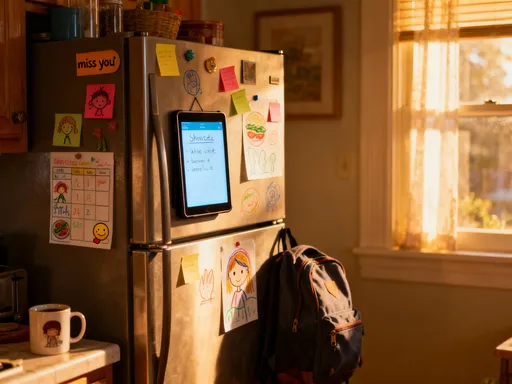
That’s when we moved our family planning to the online whiteboard. We created a shared space—our “family command center”—where everything lived in one place. Weekly meal plans. Kids’ activities. Work schedules. Even fun things, like “movie night” or “bike ride Saturday.” We used different colors for each person, added emojis for fun, and made it a ritual to review it every Sunday evening. It wasn’t just practical—it became a way to connect. The kids loved adding drawings. My partner started tagging tasks with little notes like “I’ve got this.”
The change was almost immediate. No more double-booking. No more “I thought you were handling that.” The whiteboard didn’t just reduce the arguments—it built teamwork. We weren’t passing the baton blindly; we were seeing the whole race. And because it was visual, everyone—yes, even the 8-year-old—could understand the plan. It gave us all a sense of ownership and peace. Now, when someone says, “Who’s on lunch duty?” we don’t panic. We just look at the board. It’s not magic—it’s clarity. And in a busy household, that’s everything.
Building a Personal Vision Without Pressure
We all have dreams. But how many of us actually make space for them? Mine used to live on sticky notes that yellowed on my fridge, or in the Notes app buried under grocery lists. “Learn Spanish.” “Run a 5K.” “Write that book.” They weren’t bad ideas—they just felt too big, too vague, too far from the reality of school pickups and laundry piles. And over time, I started to feel guilty for not doing them. Like I was failing at self-improvement.
Then I created a private section on my whiteboard just for me—a personal vision space. No one else could see it. It wasn’t about accountability or pressure. It was about permission. I added photos of places I wanted to visit, quotes that inspired me, and small goals broken into gentle steps. Instead of “Run a 5K,” I wrote “Walk 10 minutes three times a week.” Instead of “Write a book,” I wrote “Write one paragraph when I feel like it.” I used soft colors, added doodles, and treated it like a garden—something to nurture, not force.
What changed wasn’t the goals—it was my relationship with them. I stopped seeing them as tests of my worth and started seeing them as expressions of care. When I missed a week of walking, I didn’t delete the goal. I moved it, adjusted it, added a note: “Tired this week. Trying again.” The whiteboard held space for both progress and setbacks. It reminded me that growth isn’t linear—and that’s okay. Over time, those small steps added up. I walked more. I wrote more. I felt more like myself. And the best part? I didn’t do it out of guilt. I did it because I wanted to. The whiteboard didn’t make me more productive—it made me more compassionate. And that, I’ve learned, is the foundation of real change.
Work Projects That Finally Stay on Track
Even in my professional life, I used to struggle with scattered ideas. As a freelance project manager, I worked with remote teams across time zones. We’d have calls, brainstorm, assign tasks—but then things would slip. Emails got buried. Deadlines were missed. I’d chase people, not because they weren’t trying, but because we lacked a shared visual space. We were all working hard, but we weren’t aligned.
Then I introduced the team to the same online whiteboard I used at home. We created a project hub—our “work wall”—where every task, deadline, and idea lived in one place. We used sticky notes for to-dos, timelines for milestones, and free space for brainstorming. Anyone could add, move, or comment in real time. It wasn’t about micromanaging—it was about visibility. Suddenly, everyone could see the big picture. No more “I didn’t know that was due” or “I thought you were handling that.”
The impact was remarkable. Projects moved faster. Meetings became shorter and more focused. Team members felt more ownership because they could see how their work fit into the whole. One colleague said, “It’s like we’re finally in the same room.” And for me, it was a revelation—this tool that helped me at home was also elevating my work. It wasn’t about doing more. It was about working smarter, with less stress and more trust. The whiteboard didn’t just organize tasks—it built connection. And in a world of remote work and digital noise, that’s a rare and valuable thing.
When Life Changes—And Your Plans Must Too
Life doesn’t follow a script. No matter how well we plan, things change. A child gets sick. A project gets delayed. A dream shifts. And when that happens, rigid systems break. I learned this the hard way when my mom had surgery last year. Overnight, my schedule turned upside down. I had to adjust work deadlines, rearrange family plans, and pause personal goals. My old planner would have treated this as a failure. But my whiteboard? It adapted.
I didn’t erase anything. I didn’t give up. I simply moved things around. I created a “caregiving mode” section, added flexible timelines, and used gentle reminders like “Be kind to yourself.” The whiteboard didn’t judge. It held space for the new reality. And when I was ready, it helped me transition back—slowly, gently, without pressure. This flexibility was the real gift. It taught me that resilience isn’t about sticking to a plan no matter what. It’s about having a system that bends with you, not against you.
And that’s what I love most about this tool—it’s not about perfection. It’s about presence. It allows me to honor what’s happening now, while still keeping an eye on the future. Whether it’s a sudden change or a quiet shift in priorities, the whiteboard helps me adapt with grace. It’s not a fix. It’s a companion. And in a world that’s always changing, that’s exactly what I need.
A Calmer Mind, A Fuller Life
Looking back, I realize the online whiteboard didn’t just change how I organize my life—it changed how I experience it. The constant background noise of “Did I forget something?” has faded. I’m less reactive, more intentional. I have more time, not because I’m doing more, but because I’m not wasting energy on mental clutter. I’m more present with my kids, my partner, my work, and myself. And honestly, I’m happier.
It’s funny—such a simple shift, using a digital space to see my life clearly, has had such a deep impact. I’m not chasing productivity for the sake of checking boxes. I’m building a life that feels aligned, manageable, and meaningful. The whiteboard is more than a tool. It’s a mirror, reflecting what matters. It’s a container, holding my dreams, my responsibilities, my chaos, and my calm. It’s a reminder that I don’t have to hold it all in my head. I can put it down, look at it, and decide what to do next—with kindness, clarity, and confidence.
If you’re feeling overwhelmed, if your days feel scattered, if you’re tired of carrying the weight of it all—know this: there’s another way. You don’t need a perfect system. You don’t need to be a tech expert. You just need a little space to see your life clearly. And sometimes, that’s enough to change everything. The right tool, used with care, can do more than organize your tasks. It can help you reclaim your time, your energy, and your peace. And that? That’s the real win.